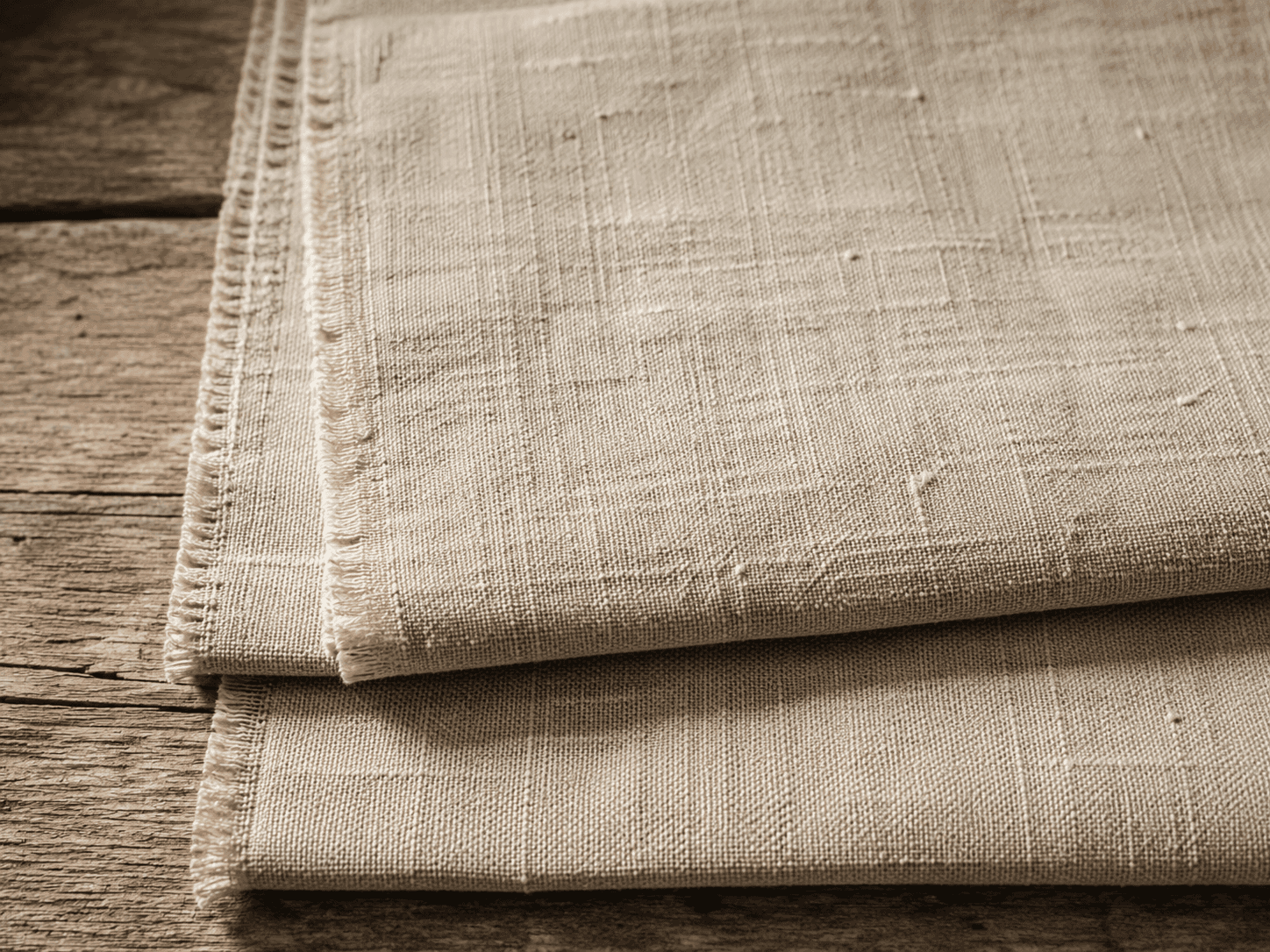
Linen is derived from the cellulose fibers of the flax plant (Linum usitatissimum). When sourcing for high-end fashion labels, understanding the geographical origin and spinning quality of the flax determines final product excellence.
1. French Flax (Normandy Region)
Normandy yields some of the finest flax globally due to its unique soil moisture and oceanic climate. French flax fibers are long, supple, and yield linen with high luster and minimal breaking points, perfect for shirtings and light premium dresses.
2. Belgian Linen Heritage
Belgian weavers have a centuries-old tradition of processing and finishing flax. Belgian linen is typically heavier, featuring a beautifully pronounced slub structure. It is highly sought after for premium suitings and luxury home textiles.
3. Dye Absorption and Weaving
Pure linen naturally resists dye compared to cotton. French flax absorbs dye more uniformly due to finer fiber walls, whereas Belgian linen retains organic color variations that give it a rustic, premium appeal. Ensure reactive dye methods are specified to prevent wash fading.